Smart home technology offers a practical way to simplify these monotonous tasks. Smart devices can automate many essential tasks without you having to remember them or perform them manually every morning. This ensures a smoother start to the day, requiring less effort and fewer decisions.
The excellent news is that creating automated morning routines does not require expensive smart home systems. Even with just a few carefully selected devices, you can achieve significant results. This article explains how homeowners can automate basic morning tasks without adding unnecessary complexity.
Understanding the Goal of Morning Automation:
When consumers first hear about smart homes, they often picture complex systems equipped with the latest technology. However, the most effective automation is often the simplest. The goal of morning automation is not to install a whole lot of devices in your home, but to help you eliminate repetitive tasks from your daily routine.
A well-designed morning ritual can prepare your home for the day even before you leave your bedroom. Lights can gradually brighten, room temperature can be adjusted automatically, and important messages can be automatically forwarded to you. These subtle adjustments can make your mornings more organised and less rushed.
Instead of trying to automate everything at once, focus on the tasks that recur every day. Regular routines often offer the greatest benefits because they avoid repeating tasks hundreds of times a year.
Start with Smart Lighting:
Lighting is often the most direct and effective starting point. Instead of waking up in a dark room or manually turning on bright lights, you can use smart lights or switches that gradually increase brightness at preset intervals. This helps you transition more naturally from sleeping to waking up.
Many homeowners find that timed lighting helps them stay awake on cold winter mornings. Turning on the light gradually, rather than relying solely on an alarm clock, makes for a more comfortable way to wake up. This feels more natural than suddenly turning on a bright ceiling light.
Smart lighting applications extend beyond the bedroom. When your morning routine begins, the lights in the hallway, kitchen, and bathroom can turn on automatically. This way, you no longer have to fumble in the dark to get ready.
Improve Your Comfort with a Smart Thermostat:
Temperature has a major impact on your morning comfort. Few people enjoy waking up in a cold room in the winter or a sweltering hot room in the summer. Smart thermostats solve this problem by adjusting the temperature before you wake up. Most smart thermostats allow users to set schedules based on their daily activities. The system can adjust the indoor temperature even before the alarm goes off, ensuring you start the day comfortably. Because the adjustment happens automatically, you don’t have to remember the thermostat settings every morning.
Thermostats with a timer not only improve comfort but also help reduce energy waste. Instead of maintaining a comfortable temperature all night during the day like traditional systems, this system adjusts automatically when needed.
Automate Your Morning Coffee:
For many families, coffee is an essential part of the morning routine. Waiting for the coffee maker to finish brewing might seem unimportant, but automation makes it much easier. Some coffee makers have a built-in timer, while others work with smart plugs.
By setting the coffee maker the night before, it automatically brews coffee at the set time. As you step into the kitchen, a delicious cup of coffee may already be waiting for you. This small convenience saves time and reduces the number of chores you have to do in the morning on busy days. Although coffee automation is not for everyone, it certainly shows how simple automation can improve daily life without a large investment or complicated installation.
Integrate Natural Light into Your Daily Life:
Natural sunlight is one of the most effective ways to wake up your body. Smart blinds and automatic curtain systems enable homeowners to integrate natural light into their morning routine without having to open the curtains manually.
Blinds can be programmed to open gradually, allowing sunlight to enter the room. This creates a more comfortable environment for waking up and helps reduce reliance on artificial lighting in the morning. Homes with large windows typically benefit the most from this automated system.
Even if motorised blinds cannot be installed, the combination of timed lighting with natural light can create a brighter and more comfortable environment every morning.
Create a Uniform Morning Routine:
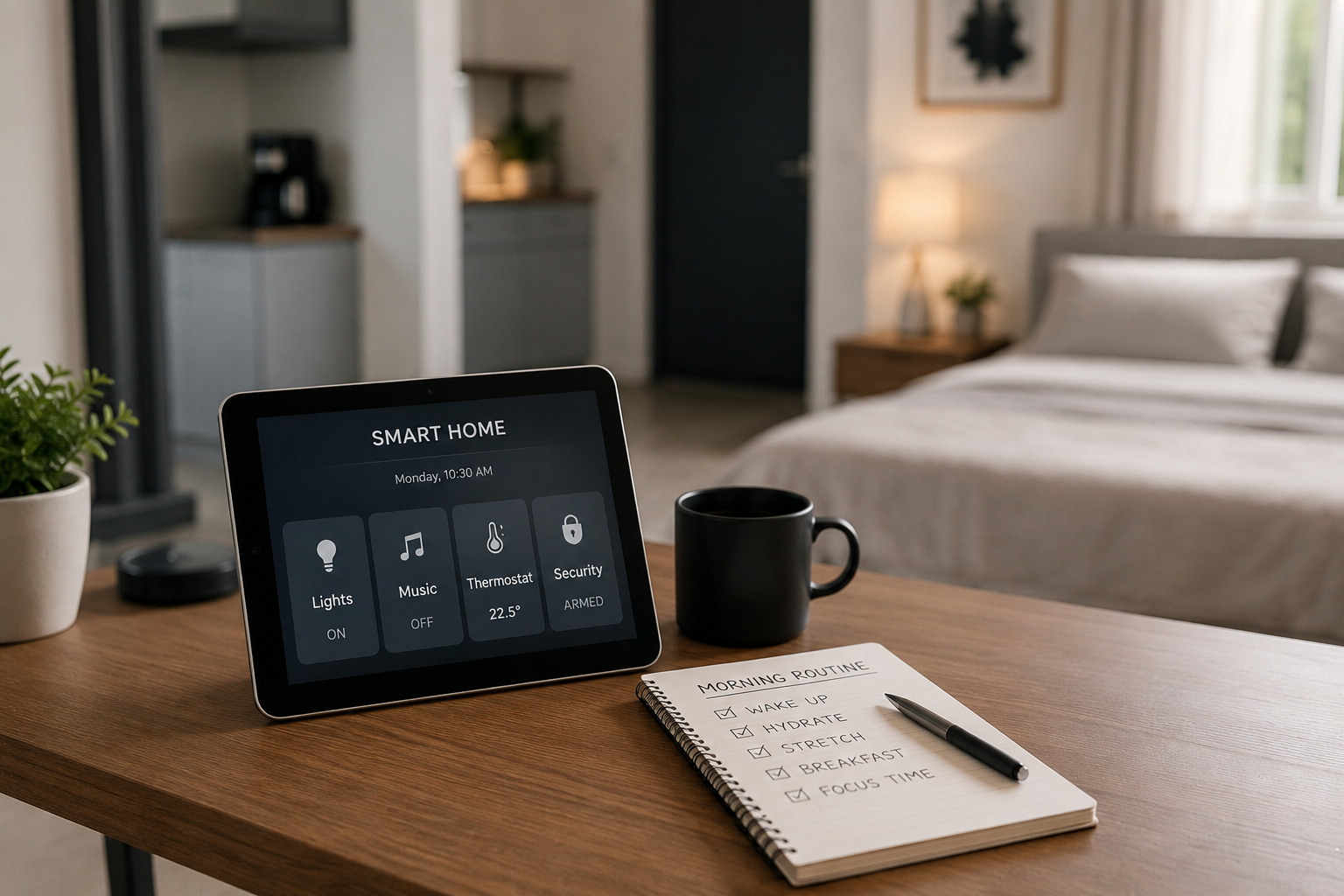
One of the most practical features of modern smart home automation systems is the ability to integrate multiple activities into a uniform workflow. You can perform multiple automated actions simultaneously according to a pre-set schedule without having to operate each device individually. For example, a morning routine can simultaneously turn on the lights, adjust the thermostat, play music, and display a weather report. All actions are performed automatically, without the need to operate various apps or devices.
This strategy helps simplify automated processes. Instead of setting separate schedules for each device, you create a uniform morning routine to manage your entire morning.
Use Smart Speakers for Useful Information:
Smart speakers have become a popular choice for many households because they can provide important information without users having to pick up their phone or computer. You can integrate weather forecasts, calendar reminders, traffic information, and important news updates into your morning routine.
When people receive this information automatically, they can plan their day more efficiently. You can obtain important information while getting dressed, preparing breakfast, or leaving the house, so there is no need to consult multiple sources.
Many platforms offer users the ability to customise the information received. This flexibility ensures that the routine remains useful and does not become an unnecessary distraction.
Automatic Lighting in Bathrooms and Hallways:
Bathrooms and hallways are usually used early in the morning, before sunrise, when other rooms are also dark. Motion sensors can automatically switch on the lighting in these spaces, making them more comfortable.
This automation is especially useful in winter, as it is darker early in the morning. You no longer have to search for switches while half-asleep; the lighting in the room automatically adjusts to your desired brightness.
Motion-controlled lighting systems can also automatically switch off after a period of inactivity, which helps to reduce energy consumption. This way, the light only stays on when someone is using the room.
Avoid Overly Complex Automation Systems:
One of the most common mistakes beginners make is trying to automate too many processes at once. Although modern smart home platforms offer a wealth of programs, excessive complexity can lead to clutter and frustration.
Simple automation is often the most reliable. A lighting schedule, a thermostat setting, and a few useful details are often more valuable than dozens of complex rules that require regular maintenance.
By starting small, you can more easily determine whether automation truly improves daily life. Once these processes prove effective, new features can be gradually added, if necessary.
Reliability Plan:
Automation is only useful if it works stably. Before relying heavily on smart devices, you should always consider how your system will react in the event of network failures or power outages. Some devices can continue to operate locally, while others rely heavily on cloud services.
Choosing products from reputable manufacturers and keeping the software up to date contributes to better long-term reliability. Furthermore, we must ensure that critical devices can still be operated manually if necessary.
A reliable automation setup should make life easier, not more complicated. Reliability always takes precedence over complex features that users may rarely use.
Conclusion:
Automating your morning routine does not require a fully connected smart home or expensive hardware. Small adjustments, such as timed lighting, automatic temperature control, smart coffee brewing, and personalised rituals, can make mornings more organised and easier.
The most successful setups prioritise convenience, comfort, and consistency. By automating daily routines, homeowners save time, reduce distractions, and have fewer decisions to make.
Whether you start with a single smart light or gradually expand to a more extensive system, well-designed automation can help you start each day better.
Frequently Asked Questions:
Do I need to use a smart home hub to automate my morning routine?
No. Many smart devices can work independently via their own apps, but a hub simplifies management when multiple devices are involved.
What is the simplest automation for a beginner?
Scheduled smart lighting is often the simplest and most economical way to start automating your morning routine.
Can smart home automation help reduce energy consumption?
Yes, automatic light schedules and smart thermostats can help reduce energy waste throughout the day.
How much does a basic morning automation system cost?
Many families start with smart lights or smart plugs so they can begin automating specific tasks without a large initial investment.
Sources & References
- U.S. Department of Energy – Energy Saver Program
- ENERGY STAR Smart Home Guidance
- Consumer Technology Association (CTA)
- Connectivity Standards Alliance
- Major smart home manufacturer documentation and setup guides
Related Articles

Elena Rodriguez is a certified home inspector and DIY educator specializing in maintenance routines, home repairs, decor optimization, office setup, and smart device integration. She helps homeowners tackle projects with confidence using tools they already own. Her writing focuses on actionable steps for cleaning, fixing, arranging, and automating. Elena holds a degree in Construction Management and contributes to home improvement resources regularly.