
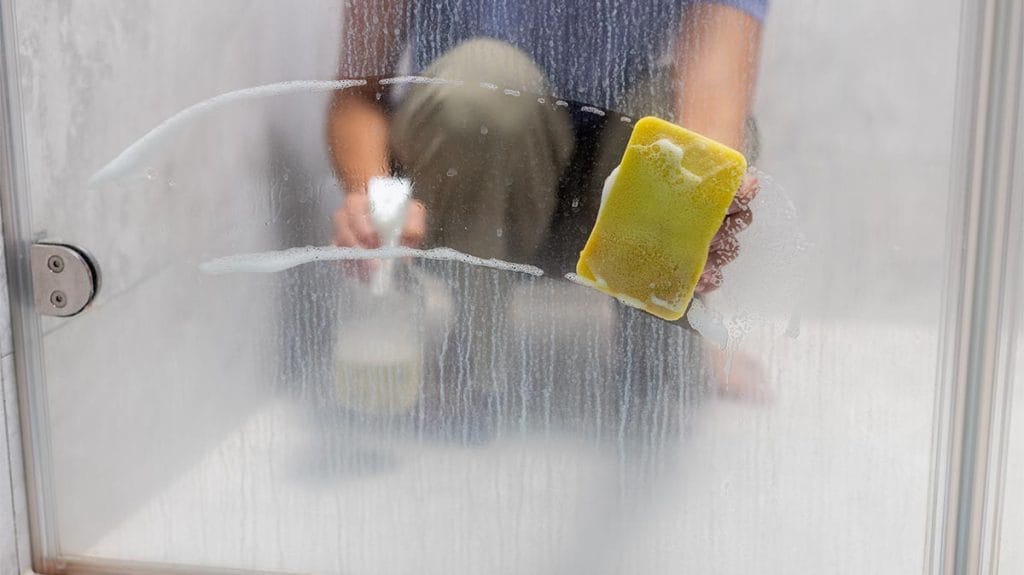
You step out of the shower and reach for the towel. The mirror is fogged, but through the clearing patch you notice the shower door. It was clear glass when you moved in. Now it looks like someone painted it with a thin layer of white chalk. The same film covers your kitchen windows, your drinking glasses, and the windshield of your car. Hard water marks are not dirt. They are geology—mineral deposits that have bonded with the glass surface and refuse to wipe away with normal cleaning.
Hard water contains dissolved calcium and magnesium. When water droplets evaporate on glass, these minerals crystallize into the chalky, cloudy spots that seem to grow more stubborn with every passing month. The longer they sit, the deeper they penetrate. Fresh marks sit on the surface. Old marks etch into the glass itself, making them progressively harder to remove without professional intervention. The key is matching your cleaning method to the age and severity of the stain.
Method 1: Vinegar and Water—For Fresh, Light Marks
This is the starting point for every hard water problem because it works on about 70% of household stains and costs almost nothing. White vinegar is mildly acidic, which dissolves the alkaline mineral deposits that form hard water stains. It is safe for all glass types, non-toxic, and already sitting in your kitchen cabinet.
Mix equal parts white vinegar and warm water in a spray bottle. Warm the solution slightly in the microwave—heat accelerates the chemical reaction between the acid and the minerals. Spray the affected glass thoroughly and let it sit for five to ten minutes. The vinegar needs time to penetrate the crystalline structure of the deposits. Wipe with a microfiber cloth in circular motions, then rinse with clean water and dry completely. Any remaining water droplets will create new marks, so drying is not optional.
For shower doors with built-up soap scum mixed with hard water stains, add a tablespoon of dish soap to the vinegar solution. The soap breaks down the organic residue while the vinegar handles the minerals. This combination is more effective than either ingredient alone.
The Overnight Soak
For stubborn marks on removable glass items like drinking glasses or vases, fill the container with straight white vinegar and let it sit overnight. The extended contact time dissolves deposits that a quick spray cannot touch. In the morning, rinse thoroughly and dry with a lint-free cloth. This method is particularly effective for the cloudy haze that develops on glassware in hard water areas.
Method 2: Lemon Juice—For Natural Scent and Extra Acidity
Lemon juice contains citric acid, which is more acidic than vinegar and works faster on dense mineral deposits. It also leaves a fresh scent that vinegar lacks, which matters in bathrooms and kitchens where lingering vinegar smell is unwelcome.
Cut a lemon in half and dip the cut surface into a small dish of table salt. The salt acts as a gentle abrasive that helps the citric acid scrub into the deposit. Rub the lemon directly onto the stained glass, working in small circles. Let the juice sit for three to five minutes, then rinse and dry. The salt is fine enough that it will not scratch glass when used with the soft pressure of a lemon half.
For larger areas like windows or shower doors, squeeze the juice of two lemons into a spray bottle with one cup of water. Spray, wait, wipe, rinse. The ratio is less critical than the freshness—bottled lemon juice from the store is less acidic than fresh-squeezed and contains preservatives that can leave residue. Use real lemons when possible.
Method 3: Baking Soda Paste—For Textured Buildup
When hard water stains have developed a raised, textured surface that you can feel with your fingernail, liquid solutions alone may not be enough. You need mild abrasion to physically break down the crystalline layer while the chemical action dissolves what remains underneath.
Mix baking soda with just enough water to form a thick paste—about the consistency of toothpaste. Apply the paste to the stained area with a damp sponge or soft cloth. The baking soda is softer than glass, so it scrubs without scratching. Work in gentle circular motions for two to three minutes, then rinse thoroughly. The paste will turn gray as it lifts the mineral deposits. If the stain persists, repeat the application before moving to stronger methods.
Do not use baking soda on etched or antique glass. The mild abrasion is safe for standard tempered and annealed glass but can damage specialty surfaces with coatings or delicate finishes. When in doubt, test on a small corner first.
Method 4: Rubbing Alcohol—For Greasy Residue Mixed With Minerals
Hard water stains in kitchens often combine with cooking grease, creating a film that resists both vinegar and baking soda. Rubbing alcohol cuts through the organic layer and dissolves mild mineral deposits simultaneously. It also evaporates completely, leaving no streaks or residue.
Mix one part rubbing alcohol with one part water in a spray bottle. Add a drop of dish soap for extra grease-cutting power. Spray the glass, wipe with a microfiber cloth, and let the alcohol evaporate naturally. This is the fastest method for spot-cleaning glass that has both water spots and fingerprints or cooking splatter. It is also excellent for maintaining glass that has already been cleaned with vinegar—use it weekly to prevent new buildup from taking hold.
Method 5: Commercial Cleaners — For Severe, Set-In Stains
When DIY methods fail, commercial products offer stronger chemistry. Bar Keepers Friend Soft Cleanser contains oxalic acid, which breaks down tough mineral deposits that vinegar cannot touch. It is safe for glass when used as directed and requires less scrubbing than baking soda. Apply a small amount to a damp sponge, work in circular motions, rinse thoroughly, and dry.
Magic Erasers use melamine foam to lift stains through microscopic abrasion. They are effective for spot-cleaning small areas and require no chemicals. Wet the eraser, squeeze out excess water, and gently rub the stained area. The foam disintegrates as it works, which is normal. Do not use Magic Erasers on tinted or coated glass—the abrasion can remove the finish along with the stain.
For extreme cases—years of buildup on exterior windows or shower doors that have never been cleaned—a professional-grade water stain remover containing mild acid may be necessary. These products are stronger than household vinegar and should be used with gloves, ventilation, and careful adherence to the manufacturer’s instructions. They are a last resort, not a first choice.
The Method Ladder
Always start with the gentlest method and escalate only if necessary. Glass is hard but not indestructible. Aggressive scrubbing with harsh chemicals can etch the surface permanently, creating a cloudy appearance that no cleaner can fix. If vinegar does not work after two attempts, move to lemon and salt. If that fails, try baking soda. Only then consider commercial products. The goal is to remove the stain while preserving the glass.
Prevention: Stopping Marks Before They Form
Removing hard water marks is reactive. Prevention is proactive, cheaper, and far less work. The most effective prevention strategy is also the simplest: dry the glass immediately after water contacts it.
A squeegee in the shower used for thirty seconds after each use eliminates 90% of hard water buildup on shower doors. The squeegee removes water before it can evaporate and leave minerals behind. A microfiber cloth hung on a hook near the shower makes the process effortless.
For windows, apply a water-repellent coating designed for glass. Rain-X, originally formulated for car windshields, creates a hydrophobic layer that causes water to bead up and roll off rather than drying in place. Apply it to shower doors and exterior windows every few months. The coating does not prevent water contact, but it prevents the water from adhering long enough to deposit minerals.
Car wax offers longer-term protection for bathroom glass. Apply a thin layer to shower doors and mirrors, and buff to a clear finish, and the wax creates a barrier that repels water and minerals for months. Reapply quarterly. The wax is invisible on glass but makes cleaning effortless—water spots wipe away with a dry cloth instead of requiring scrubbing.
The ultimate prevention is a water softener. Hard water stains are a symptom of hard water, and the only permanent cure is removing the minerals at the source. A whole-house water softener exchanges calcium and magnesium for sodium, eliminating the problem throughout your home. The upfront cost is significant, but the savings in cleaning time, product expense, and appliance longevity make it a worthwhile investment for homes in hard water areas.
When to Accept Defeat
Some hard water marks have been on the glass so long that they have etched the surface permanently. You can tell etching from surface stains by the feel. Surface stains are slightly raised and rough to the touch. Etched marks are smooth but cloudy—the minerals have chemically altered the glass itself. No amount of cleaning will restore etched glass to perfect clarity.
If you have tried three methods and the glass still looks cloudy, the damage is likely permanent. Your options are replacement or professional polishing. Glass restoration companies use polishing compounds and specialized equipment to grind away the etched layer and restore transparency. This is cost-effective for large, expensive pieces like shower doors or picture windows. For drinking glasses or small items, replacement is usually cheaper.
The lesson is to act early. A stain that wipes away with vinegar in month one becomes a permanent etch in month twelve. The same thirty seconds of prevention that stops the stain from forming also stops the etch from developing. Hard water is relentless, but it is also predictable. It will mark every surface it touches. Your job is to remove the mark before it becomes part of the glass.
Related Articles
- Why Grout Darkens Even After Regular Mopping
- How to Clean Gutters Safely Without a Tall Ladder
- Refrigerator Coils Collect Dust and Raise Your Bill
- Simple Guide to Washing Machine Care for Longer Use
- Why Garbage Disposals Smell and How to Freshen Them
- How to Clean Air Vents Without Spreading Dust Around
- Common Reasons Laundry Feels Damp After Drying Fully
Sources and References
- Drexler Glass Co. “Preventing Hard Water Stains on Glass.” October 2, 2025. https://www.drexlerglass.com/preventing-hard-water-stains-on-glass/
- Shine Window Cleaning. “Water Stains on Glass: An Expert’s Advice.” May 12, 2025. https://shine-windowcleaning.com/westlake/water-stains-on-glass-an-experts-advise/
- Magic Window. “6 Best Tips on How to Get Hard Water Stains Off Glass.” June 13, 2025. https://www.magicwindow.ca/blog/6-best-tips-on-how-to-get-hard-water-stains-off-glass
- Pure Southern Water. “A Practical Guide to Removing and Preventing Hard Water Stains on Glass.” April 15, 2025. https://puresouthernwater.com/guide-in-removing-and-preventing-hard-water-stains-on-glass/
- City Glass Wisconsin. “How to Prevent Hard Water Stains on Glass Showers & Windows.” March 7, 2025. https://www.cityglasswisconsin.com/how-to-prevent-hard-water-stains-on-glass-showers-windows
- Window Genie. “The Hard Truth About Hard Water Stains on Windows.” January 27, 2026. https://www.windowgenie.com/blog/the-hard-truth-about-hard-water-stains/
- Southern Living. “How To Remove Hard Water Stains From Glass.” March 10, 2026. https://www.southernliving.com/remove-hard-water-stains-from-glass-11917073

Elena Rodriguez is a certified home inspector and DIY educator specializing in maintenance routines, home repairs, decor optimization, office setup, and smart device integration. She helps homeowners tackle projects with confidence using tools they already own. Her writing focuses on actionable steps for cleaning, fixing, arranging, and automating. Elena holds a degree in Construction Management and contributes to home improvement resources regularly.