
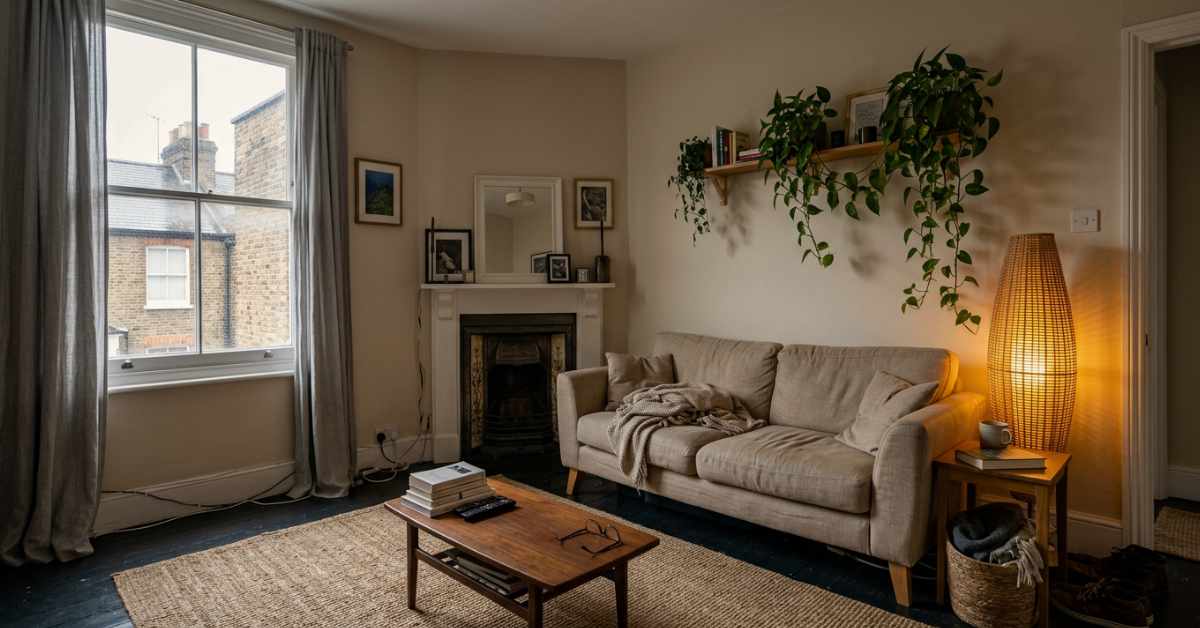
The size of a room is not determined by its surface area but by the way light falls into it. Or, more precisely, by the lack of light. Dark corners draw attention, divide the room into different zones, and make a spacious room feel cramped and enclosed. The brain interprets shadows as boundaries, and too many boundaries create a sense of confinement. That is why two rooms of the same size can feel drastically different. One feels light, spacious, and airy; the other feels heavy—the walls seem too massive. This difference almost always stems from the extent to which light reaches the different corners of the room.
Dark Corners—What is their Role?
Shadows are not neutral. Research in environmental psychology has shown that dark environments amplify feelings of confinement and can even influence mood; poorly lit rooms are associated with reduced energy levels and concentration problems. The lack of light in corners creates visible ‘dead zones’ that disrupt the continuity of the space. From an architectural perspective, the corners of a room are typically located furthest from most light sources (such as windows or ceiling lights). Shadows accumulate imperceptibly in these corners. When a corner becomes completely dark, people’s eyes no longer focus on it, making the visual boundaries of the space appear much smaller than the walls themselves.
Tips for Lighting Dark Corners
Lighting dark corners does not mean filling the entire room with bright light. The key is to create layered lighting that lets the eye move naturally across the room. The best way to achieve this effect is by letting in as much natural light as possible. Then, use artificial lighting smartly to enhance the natural light. Finally, you can coordinate the decor and furniture placement with the natural light.
Making the Most of Daylight
Natural light is our most powerful weapon for making a space feel more open and spacious. First step: identify what is blocking the natural light. Heavy curtains, cluttered outdoor plants, and furniture near windows all limit the amount of natural light entering the room. A simple adjustment: replace blackout curtains with sheer or linen curtains. Placing a mirror opposite or next to a window allows light to be reflected into the deeper part of the room, bringing more light into previously dark corners. Light-colored walls and ceilings also help: light colors reflect natural light rather than absorbing it, allowing the light to illuminate the entire space more effectively.
Artificial Lighting
When natural light is insufficient, artificial lighting is needed to supplement it; however, not all lighting design principles are the same. Ceiling lights are certainly convenient, but they rarely illuminate corners well. The solution is layered lighting. Arrange ambient light, task lighting, and accent lighting smartly throughout the space.
One of the simplest solutions is placing floor lamps in poorly lit corners. Uplighting refers to projecting light onto the ceiling using fixtures. This produces soft, diffused light and prevents shadow formation. Corner lighting achieves the same effect, and the use of wall lights saves floor space. If you have shelves or niches, you can install LED light strips to create depth and layering without complicated installation. The color temperature is also crucial. Warm white light (approximately 2700-3000K) creates a warm and spacious atmosphere, while cool tones make a room feel cold and enclosed. For living spaces, warm light is almost always the best choice.
Creative Decoration and Furniture Placement
Lighting is important, but your decoration choices can be the finishing touch. Large, dark furniture in corners absorbs light and creates an undesirable heavy effect. Opt for light furniture or pieces with legs that expose the floor so that corners appear more spacious, even before lighting is installed.
Mirrors also deserve a mention. They not only reflect natural light but also create a sense of depth as a decorative element. A tall mirror leaning against a corner or extending into a dimly lit space draws attention, creates a sense of space, and makes the room appear larger than it actually is. Plants are another often overlooked but ingenious way to enhance the space. By placing a tall, slender plant, such as a fiddle-leaf fig or a sansevieria, in a corner, you add vitality and vertical accents to an otherwise easily overlooked space without making it look heavy. The plant’s natural shape complements the soft tones of the walls, making the corner look thoughtfully arranged rather than cluttered.
The Psychological Impact of Light
There is a close connection between psychological comfort and light. Research published in the journal *Architecture & Environment* shows that the amount of natural and artificial light directly influences mood, alertness, and spatial perception. People generally perceive brighter spaces as more pleasant, productive, and less stressful. This is not just an aesthetic issue; it is a neurological one. Low light is associated with darkness and sleep, while bright light is associated with an active and open brain. Dark corners in a home can feel claustrophobic if there is no reason to feel confined. Transforming these corners is not just about changing the look of a space; it is about how you feel in them.
Light Up Your Home
The biggest advantage of dark corners is that they can be transformed without drastic changes. You don’t have to demolish walls or make expensive structural adjustments. A floor lamp, a mirror, a lighter paint color, or simply moving some furniture can entirely change the atmosphere of a room in an afternoon. Start with the corner that bothers you the most – the corner your eyes instinctively avoid. Begin by adding a light source and then consider which decorative elements complement it. Renovate each room individually and observe how the entire space changes as more light enters every corner. The end result can be stunning: the same house suddenly becomes more spacious, warmer, and more comfortable.
Corners Make your Home Brighter
Homeowners often do not consciously consider those dark corners. They are simply part of the space. But they play a crucial role in how people experience space. Making smart use of these corners is one of the most effective and cost-efficient ways to make a home appear larger, brighter, and more comfortable. Light flows, and with it, the sense of space. If you create a free passage for light, your home will transform.
FAQs
1. Why do dark corners make a room look smaller?
Dark corners create visual ‘dead zones’ that obstruct the natural flow of vision in the room. The brain perceives shadows as boundaries, causing the visual surface of a space to appear smaller, even though the actual surface remains unchanged.
2. How can you easily brighten up a dark corner?
Placing a floor lamp with upward lighting in the corner is the quickest and most economical solution. It provides focused lighting without installation and immediately reduces shadows in the corner.
3. Can paint color improve dark corners?
Yes. Light walls—especially white, off-white, and light neutral shades—reflect more natural and artificial light than dark walls. Lighter walls distribute light more evenly throughout the room, reducing the contrast between light and dark areas.
4. Can mirrors really brighten up a dark room?
Mirrors reflect both natural and artificial light, effectively projecting it into otherwise dark spaces. By placing a mirror next to or opposite a window, the amount of natural light in a room can increase significantly.
5. Which lamps make a room look bigger?
They provide a soft, warm glow that does not feel harsh or cold but rather creates a sense of openness and coziness.

Elena Rodriguez is a certified home inspector and DIY educator specializing in maintenance routines, home repairs, decor optimization, office setup, and smart device integration. She helps homeowners tackle projects with confidence using tools they already own. Her writing focuses on actionable steps for cleaning, fixing, arranging, and automating. Elena holds a degree in Construction Management and contributes to home improvement resources regularly.