
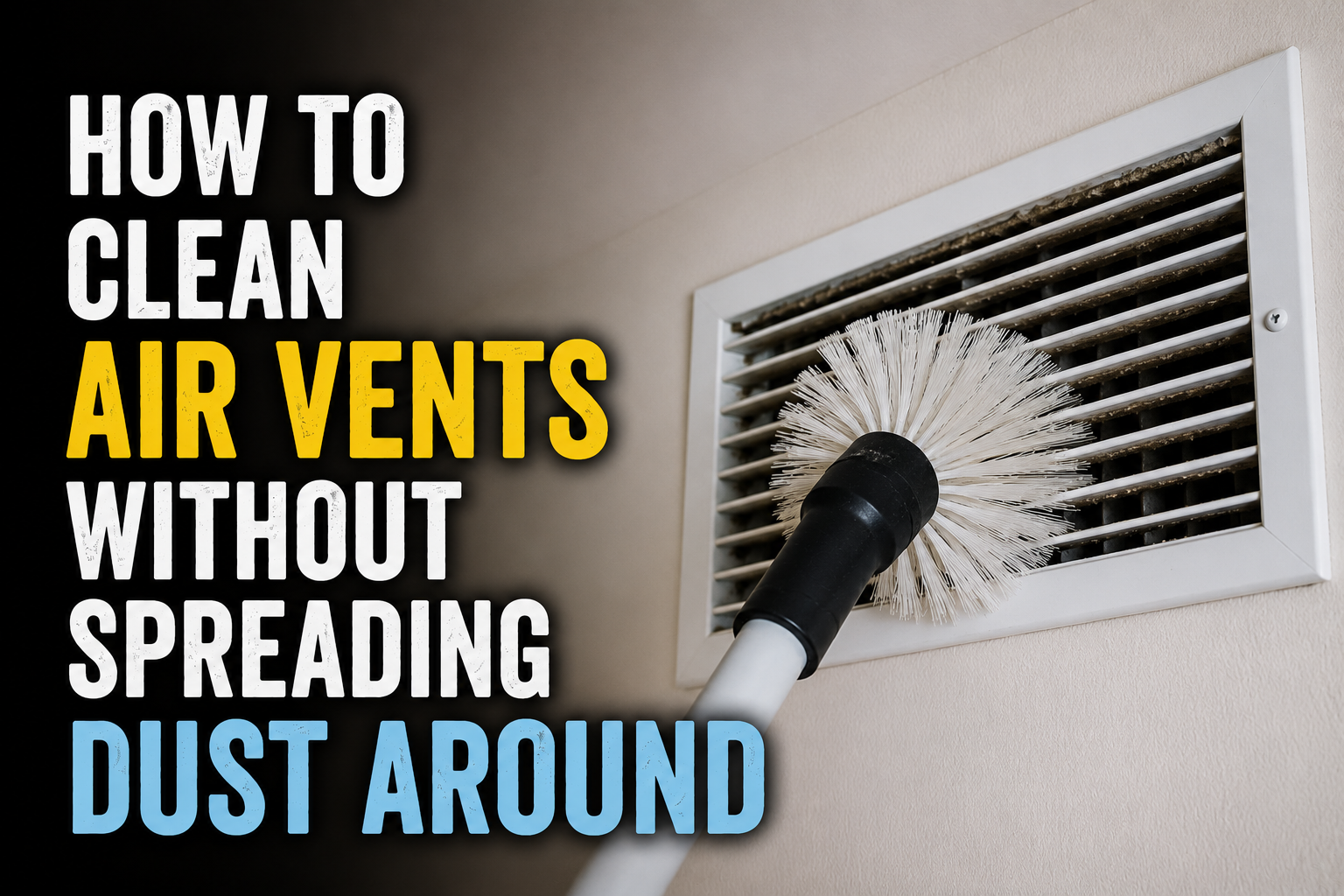
You open the vent cover and a gray cloud puffs out into the room. It settles on your furniture, your curtains, your coffee cup. You sneeze. The dog sneezes. An hour later, every surface in the room looks like it has been lightly dusted with flour. You cleaned the vent, but you made the rest of your house dirtier in the process. This is the dust spread problem, and it is the reason many homeowners avoid cleaning their vents at all.
Air vents are not just exit points for conditioned air. They are collection basins for everything your HVAC system has been circulating for months or years. Dust, pet hair, skin flakes, pollen, and the mysterious gray fuzz that seems to materialize from nowhere. When you disturb this accumulation without a containment strategy, you become the distribution system. The dust that was quietly sitting in the duct is now airborne and settling on every surface in a twenty-foot radius. The cleaning created more problems than it solved.
The solution is not to avoid cleaning. It is to clean with containment. The goal is to remove dust from the vent and capture it before it escapes into the room. This requires a specific sequence, specific tools, and a specific mindset. You are not dusting a vent. You are performing a controlled extraction.
Why Vents Spread Dust When Cleaned
The physics are simple. Dust that has settled in a duct is held in place by gravity and static cling. When you brush it, vacuum it, or even blow on it, you break the forces holding it down. The particles become airborne. If your cleaning method does not immediately capture them, they float on air currents and settle elsewhere. The EPA notes that dust and debris in HVAC systems can recirculate through the home five to seven times per day, spreading contaminants and forcing the system to work harder. When you clean without containment, you are manually triggering that recirculation at maximum intensity.
The HVAC system itself makes this worse. If the fan is running while you clean, it creates suction at the return vents and pressure at the supply vents. Any dust you dislodge gets immediately pulled into the system or blown out into the room. The very tool that is supposed to clean your air becomes the distribution mechanism for the dust you just disturbed. Turning the system off before cleaning is not optional. It is the first step in any proper vent cleaning protocol.
The Containment Toolkit
Before you touch a single vent, gather the right equipment. Improvisation is where containment fails.
- A vacuum with HEPA filtration: Standard vacuums exhaust fine particles back into the room through the exhaust port. HEPA filters capture 99.97% of particles down to 0.3 microns, which includes most household dust and allergens. If your vacuum does not have a HEPA filter, do not use it for vent cleaning. You will make the air quality worse.
- A crevice tool and brush attachment: The crevice tool reaches into the duct opening. The brush attachment loosens stuck-on dust without creating clouds. You need both.
- Microfiber cloths: Unlike cotton or paper towels, microfiber traps dust rather than pushing it around. Dampen the cloth slightly for maximum particle capture. Dry microfiber creates static that can actually repel fine dust.
- A screwdriver: Most vent covers require a screwdriver to remove. Trying to clean around a fixed cover is ineffective and creates more dust disturbance than removing it properly.
- A drop cloth or old sheet: Place this on the floor beneath the vent to catch any debris that falls during removal or cleaning. It is easier to shake out a sheet than to vacuum a carpet.
- A dust mask and safety glasses: Vent dust is not clean dust. It contains skin cells, pet dander, pollen, mold spores, and whatever else has been circulating through your home. Protect your lungs and eyes. The mask is not paranoia. It is basic hygiene.
The Golden Rule
Never clean a vent while the HVAC system is running. Turn the thermostat to “Off” or shut off power at the breaker. The five minutes of inconvenience prevents hours of dusting every surface in your home afterward. The system will not be damaged by a brief shutdown, and your air quality will be protected.
Step-by-Step: The Contained Cleaning Protocol
Follow this sequence exactly. Each step builds on the previous one to create a contained environment where dust is captured, not released.
Step 1: Turn Off the HVAC System
Switch the thermostat to “Off.” For added safety, turn off the power at the breaker box. This prevents the fan from activating unexpectedly while your hands are near the vent or while dust is airborne. The EPA specifically recommends turning off the HVAC system before cleaning vents to prevent dust from being drawn into the system and causing damage.
Step 2: Lay Protection
Place a drop cloth or old sheet on the floor directly beneath the vent. Extend it two feet in all directions. This catches debris that falls during cover removal and the dust that shakes loose when you brush the duct interior. A sheet is better than newspaper because it does not allow fine dust to sift through. When you are done, take the sheet outside and shake it before laundering.
Step 3: Remove the Vent Cover
Most vent covers attach with two to four screws. Use a screwdriver to remove them carefully. Some covers are held by friction clips that require gentle prying. Support the cover as you remove the last screw so it does not drop and scatter dust. Place the cover screw-side-up on the drop cloth. The screws will not roll away, and any dust on the cover falls onto the cloth, not your floor.
Step 4: Vacuum the Duct Opening
Attach the crevice tool to your HEPA vacuum. Insert it into the duct opening as far as it will reach—usually six to twelve inches. Move it slowly around the perimeter, sucking up loose dust before it can fall. Do not brush yet. The initial vacuum pass removes the loose material that would otherwise become airborne when disturbed. Work from the top of the duct downward, letting gravity help the dust fall toward the vacuum nozzle.
Step 5: Brush and Vacuum Simultaneously
Switch to the brush attachment on your vacuum. Hold the brush against the duct interior and move it in short strokes while the vacuum runs. The brush loosens stuck-on dust. The vacuum captures it immediately. This is the critical step that prevents dust spread. If you brush without vacuuming, you create a cloud. If you vacuum without brushing, you leave adhered dust behind. The combination is what makes the method work.
For deep ducts beyond vacuum reach, use a long-handled duster with microfiber sleeves. Work the duster into the duct, then withdraw it slowly while holding the vacuum crevice tool near the opening to catch anything that falls. The duster brings dust to the opening. The vacuum captures it before it escapes. This two-person technique works best with a partner, but it can be done alone with practice.
Step 6: Clean the Vent Cover
Take the cover to a sink or bathtub. Submerge it in warm, soapy water and scrub both sides with a soft brush. The back side is usually dirtier than the front because it faces the duct. Rinse thoroughly and let it air dry completely. A wet cover reinstalled in the duct creates a moisture trap that can breed mold. Dry time is not optional. If you need the vent back in service quickly, dry it with a hair dryer on low heat.
Step 7: Wipe the Surrounding Area
Before reinstalling the cover, use a damp microfiber cloth to wipe the wall or ceiling around the vent opening. Dust settles on these surfaces during the cleaning process. Removing it now prevents the HVAC system from blowing it into the room when you turn the power back on. Pay attention to the screw holes, which often harbor dust rings that become visible after the cover is replaced.
Step 8: Reinstall and Restore Power
Once the cover is completely dry, reattach it with the screws. Remove the drop cloth, shake it outside, and launder it. Turn the HVAC system back on at the breaker and thermostat. The vent is now clean, the dust is contained, and your room is not coated in gray film.
Handling Ceiling Vents
Ceiling vents present a unique challenge because gravity works against you. Dust falls downward during cleaning, directly onto your head and the floor below. The protocol is the same, but the protection must be more robust.
Wear a dust mask and safety glasses. The falling dust is unavoidable, and you do not want it in your eyes or lungs. Use a step ladder that allows you to work comfortably without overreaching. Overreaching causes loss of balance and dropped tools, which create more mess than the cleaning itself. Place a large drop cloth on the floor beneath the vent, extending three feet in all directions. Ceiling vents often release more debris than wall or floor vents because the dust has been accumulating on the horizontal surface for longer.
Work in small sections. Vacuum a six-inch area, then brush and vacuum that same area, then move to the next six inches. Do not try to clean the entire duct at once. The dust load from a full ceiling vent is more than most household vacuums can handle in a single pass. Sectional cleaning prevents overwhelm and maintains containment.
Return Vents vs. Supply Vents
Return vents—the large grilles that pull air back into the system—are typically dirtier than supply vents because they are the entry point for room air. They collect dust, hair, and debris from the entire room. Supply vents distribute conditioned air and tend to stay cleaner, though they can develop dust buildup on the fins that direct airflow.
Return vents require more frequent cleaning. Check them every three months. Supply vents can go six months between cleanings unless you notice reduced airflow or visible dust accumulation. The return vent is your first line of defense. Keeping it clean reduces the dust load on the entire system, which means cleaner ducts, cleaner air, and less strain on your HVAC filter.
The Filter Connection
Clean vents are only half the battle. A dirty filter allows dust to bypass the filtration system and enter the ducts, where it settles and waits for you to clean it again. Change your HVAC filter every 90 days at minimum. Homes with pets, allergies, or recent construction should change filters every 30 to 60 days. A clean filter is the single most effective way to reduce how often you need to clean your vents at all.
When DIY Is Not Enough
Home vent cleaning handles the visible surfaces and the immediate duct opening. It does not clean the ductwork inside your walls. If you see mold growth inside the duct, smell musty odors when the system runs, or notice dust blowing from vents every time the HVAC activates, the problem is deeper than DIY can reach. Professional duct cleaning uses truck-mounted vacuums with 16,000 CFM suction, rotary brushes, and compressed air whips that reach deep into the system. The EPA recommends professional cleaning when ducts are visibly contaminated with substantial mold growth, pests, or significant dust deposits. For most homes, professional cleaning every 3 to 5 years is sufficient between DIY vent maintenance.
Related Articles
- Why Grout Darkens Even After Regular Mopping
- How to Clean Gutters Safely Without a Tall Ladder
- Refrigerator Coils Collect Dust and Raise Your Bill
- Simple Guide to Washing Machine Care for Longer Use
- Easy Ways to Remove Hard Water Marks From Glass
- Why Garbage Disposals Smell and How to Freshen Them
- Common Reasons Laundry Feels Damp After Drying Fully
Sources and References
- EPA. “Should You Have the Air Ducts in Your Home Cleaned?” February 19, 2026. https://www.epa.gov/indoor-air-quality-iaq/should-you-have-air-ducts-your-home-cleaned
- LCS Heating and Cooling. “Clean Air Vents: LCS’s 5 Steps to a Sparkling Home in 2025. “2025.” https://lcsheatingandcooling.com/blog/ultimate-air-vent-cleaning-guide
- One Hour Heating & Air Conditioning. “Best Time to Clean Air Ducts in 2026.” February 18, 2025. https://www.onehourheatandair.com/west-valley/about-us/blog/2025/november/best-time-to-clean-air-ducts-in-2026/
- Air Doctor Tulsa. ” HVAC Cleaning & Maintenance: Annual Home Checklist.” February 15, 2025. https://airdoctortulsa.com/blog/year-round-duct-maintenance-checklist/
- Aire Serv. “How To Clean Dirty Air Vents.” https://www.aireserv.com/about/blog/how-to-clean-dirty-air-vents/
- Direct Energy. “Signs Your Air Ducts Need Cleaning & How Often to Clean Them.” October 1, 2024. https://www.directenergy.ca/en/learn/home-improvement/signs-your-ducts-need-cleaning
- Enercare. “10 Signs Your Air Ducts Need Cleaning.” September 9, 2025. https://www.enercare.ca/blog/home-cooling/what-look-if-youre-wondering-if-home-ducts-need-cleaning
- First American Home Warranty. “How to Clean Air Ducts: A Step-by-Step Guide.” https://homewarranty.firstam.com/blog/how-to-clean-air-ducts

Elena Rodriguez is a certified home inspector and DIY educator specializing in maintenance routines, home repairs, decor optimization, office setup, and smart device integration. She helps homeowners tackle projects with confidence using tools they already own. Her writing focuses on actionable steps for cleaning, fixing, arranging, and automating. Elena holds a degree in Construction Management and contributes to home improvement resources regularly.