
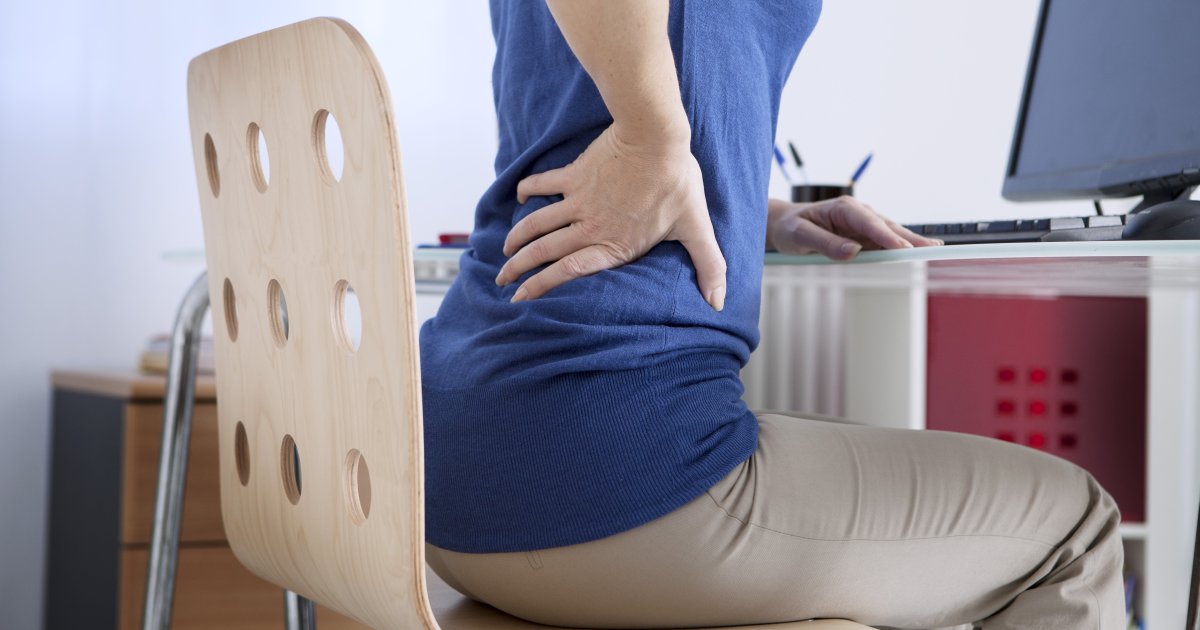
Mark bought his desk chair for $89 at a big-box store. It looked fine. It had wheels, a height-adjustment lever, and a mesh back that seemed breathable. Six months later, he was seeing a physical therapist for lower back pain that started as a dull ache and progressed to a sharp sensation radiating down his left leg. The therapist asked about his chair. Mark described it. The therapist nodded. She had seen this exact story hundreds of times.
Cheap chairs are not just uncomfortable. They are biomechanically hostile. They force your body into positions that violate the basic engineering of your spine, and because the discomfort starts gradually, you do not notice the damage until it becomes a medical problem. By then, the $89 chair has cost you hundreds in co-pays, hours of lost productivity, and weeks of pain that could have been prevented with a better seat.
What a Cheap Chair Actually Does to Your Spine
Your spine is not a straight column. It is a series of curves — cervical, thoracic, and lumbar — that distribute weight and absorb shock like a spring. When you sit in a chair that supports these curves, your spinal discs remain evenly loaded and your surrounding muscles work minimally. When you sit in a cheap chair, the spring collapses.
A 2025 study published in Applied Sciences compared a conventional flat-seat chair with an ergonomic chair featuring a flexible, segmented seat pan. Using motion capture and electromyography, researchers found that the cheap chair limited pelvic rotation and flattened the natural lumbar curve. The ergonomic chair, by contrast, promoted forward pelvic tilt and maintained the spine’s S-shape. The difference was not subtle — it was measurable in degrees of spinal angle and percentages of muscle activation.
When your pelvis rotates backward in a cheap chair — which it inevitably does because the flat seat offers no support for forward tilt — your lumbar spine flattens. This increases pressure on the posterior annulus of your intervertebral discs, the ring of fibrous tissue that holds the gel-like nucleus in place. Over months, this uneven loading causes the annulus to weaken. Eventually, the nucleus pushes through, creating a herniated disc that compresses nearby nerve roots. The result is the radiating leg pain that sent Mark to physical therapy.
The muscle story is equally important. A systematic review of sitting and working furniture ergonomics found that low back pain is the most dominant work-related musculoskeletal disorder. The mismatch between furniture dimensions and body size leads to uncomfortable sitting posture, which triggers sustained muscle tension as your body fights to hold itself upright without proper support.
The Four Fatal Flaws of Budget Chairs
Cheap chairs share common design failures that directly counteract healthy sitting. Understanding these flaws helps you identify them in any chair before you buy.
Flaw 1: Flat Seat Pan
The seat of a cheap chair is typically a flat, rigid surface. Your pelvis sits on this plane like a rock on a table. Without contour, the ischial tuberosities — the bony points commonly called “sit bones” — bear concentrated pressure. The soft tissue between them compresses, restricting blood flow to the thighs and creating the numbness you feel after sitting for an hour.
A proper seat pan has a slight forward tilt or a flexible surface that allows the pelvis to rotate anteriorly. This anterior tilt is what maintains your lumbar curve. When the seat is flat or, worse, tilts backward, your pelvis rolls backward, your lower back rounds, and your shoulders fall forward to compensate. The entire kinetic chain collapses from the bottom up.
Flaw 2: Non-Adjustable or Fake Lumbar Support
Many cheap chairs claim to have “lumbar support” that is actually just a piece of foam glued to the backrest at a fixed height. The problem is that lumbar spines vary in length by several inches between individuals. A support that hits the right spot for a 5’10” person jams into the upper pelvis of someone who is 5’2″. A support that feels correct for a 6’2″ person misses entirely for someone shorter, leaving their actual lumbar region unsupported.
Real lumbar support is height-adjustable and depth-adjustable. It should move up and down by at least 4 inches and in and out by at least 2 inches. Without this range, the support is decorative, not functional. According to research on ergonomic seating, adjustable seating can reduce lower back pressure by up to 50% compared to fixed designs.
Flaw 3: No Seat Depth Adjustment
Seat depth is the distance from the front edge of the seat to the backrest. If this distance is too long for your thigh length, the front edge of the seat cuts into the back of your knees, compressing blood vessels and nerves. If it is too short, you cannot sit back fully, which causes you to perch on the front edge of the chair and lose all backrest support. Cheap chairs typically offer one seat depth — usually around 18 inches — which fits only a narrow range of body sizes.
Proper seat depth allows 2 to 3 inches of clearance between the seat edge and your knee fold. This space prevents popliteal compression, which is the technical term for the restriction of blood flow behind the knee. When this area is compressed, you feel restless, shift constantly, and eventually stand up — not because you want to, but because your body is demanding circulation.
Flaw 4: Fixed Armrests at Wrong Height
Armrests that are too high force your shoulders upward, which strains the trapezius muscles and contributes to neck pain. Armrests that are too low provide no support, causing your shoulders to hang unsupported for hours. Armrests that are fixed in place and too wide force your elbows to flare outward, which rotates your shoulders internally and tightens your chest. Cheap chairs almost always get armrests wrong because they are designed for a generic body that does not exist.
The 30-Minute Test
Sit in any chair for 30 minutes without getting up. If you feel the need to shift position more than twice, if your lower back feels hollow, if your thighs feel numb, or if your shoulders are tense — the chair is failing you. A good chair disappears. You forget about it. A bad chair demands constant attention through discomfort.
Why Your Body Adapts to the Wrong Position
The human body is remarkably adaptable. It will accommodate almost any position you put it in, including harmful ones. This adaptability is why cheap chairs feel “fine” at first. Your spine bends to meet the chair. Your muscles tighten to hold the bent position. Your brain adjusts its proprioceptive baseline — its internal sense of what “normal” feels like — to match the new posture.
This adaptation is dangerous because it masks the damage. You do not feel the flattening of your lumbar curve because your proprioception has recalibrated. You do not notice the forward head posture because it has become your default. The pain that eventually breaks through is not the start of the problem. It is the end stage of a process that began months earlier, when your body first started compensating for a chair that was working against it.
A study on ergonomic chair design and evaluation found that most existing office chairs are not designed to conform to the shape of the human spine in the workplace. The main issue is that the waist depth is excessive, together with the backrest and headrest, as well as the distance between the human body. This mismatch between chair dimensions and human anatomy is the root cause of the postural problems that cheap chairs create.
What to Look For in a Chair That Actually Helps
You do not need to spend $1,000 to get a chair that protects your posture. You need to spend enough to get four specific features. If a chair lacks any of these, it is a cheap chair with a higher price tag.
| Feature | Why It Matters | Minimum Adjustment Range |
|---|---|---|
| Seat height | Positions thighs parallel to floor, feet flat | At least 4 inches |
| Seat depth | Prevents knee compression, allows full back contact | At least 2 inches |
| Lumbar support | Maintains natural spinal curve | Height: 4 inches; Depth: 2 inches |
| Armrests | Supports shoulders without raising them | Height, width, and pivot adjustment |
| Recline tension | Allows dynamic movement, reduces static loading | User-adjustable resistance |
The recline feature is particularly important and often overlooked. A chair that locks you upright forces static loading on the same spinal discs and muscles for hours. A chair that reclines with adjustable tension allows you to shift your weight backward, which redistributes pressure and activates different muscle groups. The 2025 study on flexible seat pans found that dynamic sitting — continuous small movements while seated — reduces muscle tension and distributes pressure on the spine.
Immediate Fixes If You Cannot Replace Your Chair
Not everyone can buy a new chair today. If you are stuck with a cheap seat, these modifications reduce the damage while you save for an upgrade:
- Add a lumbar roll. A small pillow, rolled towel, or dedicated lumbar cushion placed at the small of your back restores some of the missing curve. The key is positioning — it should sit at your belt line, not higher. Too high and it pushes you forward. Too low and it does nothing.
- Sit on a wedge cushion. A foam wedge that tilts your pelvis forward by 5 to 10 degrees counteracts the backward rotation that flat seats cause. This is the single most effective cheap fix for lumbar support.
- Remove or lower armrests. If your armrests are fixed and too high, they are doing more harm than good. Take them off if possible. If not, avoid resting your arms on them during typing.
- Use a footrest. If your chair is too high and your feet dangle, a footrest under your desk brings your knees to the correct angle and reduces the backward pelvic tilt that occurs when your legs swing freely.
- Set a timer for standing. No chair can save you from sitting all day. Set a timer to stand and move for 2 minutes every 30 minutes. The movement breaks the postural holding pattern that cheap chairs force you into.
The Real Cost Calculation
A $300 chair that lasts 10 years costs $2.50 per month. A $89 chair that causes back pain requiring one physical therapy session costs more in the first month than the better chair costs in a decade. The math is simple. The psychology is hard — we resist spending money on things we cannot see, even when those invisible things determine our daily comfort and long-term health.
When to Seek Help
Some symptoms indicate that chair-related posture problems have progressed beyond what self-adjustment can fix:
- Pain that radiates down the leg suggests nerve compression, possibly from a herniated disc.
- Numbness or tingling in the feet or hands indicates nerve impingement that requires professional evaluation.
- Morning stiffness that lasts more than 30 minutes may signal inflammatory changes in the spine.
- Weakness when standing on your toes or heels is a neurological red flag that demands immediate medical attention.
These symptoms do not mean you need surgery. They mean you need a diagnosis. A physical therapist or orthopedic specialist can determine whether your chair is the primary cause or a contributing factor, and can guide you toward the right combination of ergonomic changes and therapeutic exercises.
Mark eventually bought a proper ergonomic chair. It cost $350. His back pain resolved over six weeks. He still sees the physical therapist occasionally for maintenance, but the sharp radiating pain never returned. The $89 chair sits in his garage, a reminder that the cheapest option is often the most expensive one.
Related Articles
- Why Desk Height Causes Wrist Pain During Long Calls
- How to Position a Monitor to Stop Daily Neck Strain
- Background Noise Ruins Video Calls and This Helps
- Simple Guide to Creating a Focus Zone in a Shared Home
- Easy Ways to Store Papers Without a Filing Cabinet
- How to Set Boundaries When Family Shares Your Workspace
- Common Reasons Video Lighting Looks Unprofessional at Home
Sources and References
- PMC. “A Systematic Review of Research on Sitting and Working Furniture Ergonomics.” PMC, 2024. https://pmc.ncbi.nlm.nih.gov/articles/PMC10988004/
- MDPI Applied Sciences. “An Ergonomic Design and Evaluation of a Chair with a Flexible Seat Pan for the Maintenance of Correct Sitting Posture.” December 2025. https://www.mdpi.com/2076-3417/15/23/12714
- Vergo. “Ergonomic Chair vs Normal Chair for WFH: Which Should You Choose?” April 2026. https://vergo.online/blogs/news/ergonomic-vs-regular-chairs-which-is-the-best-office-chair
- Forbes. “Best Office Chairs 2026 | Tested.” May 12, 2026. https://www.forbes.com/sites/forbes-personal-shopper/article/best-office-chairs/

Elena Rodriguez is a certified home inspector and DIY educator specializing in maintenance routines, home repairs, decor optimization, office setup, and smart device integration. She helps homeowners tackle projects with confidence using tools they already own. Her writing focuses on actionable steps for cleaning, fixing, arranging, and automating. Elena holds a degree in Construction Management and contributes to home improvement resources regularly.