
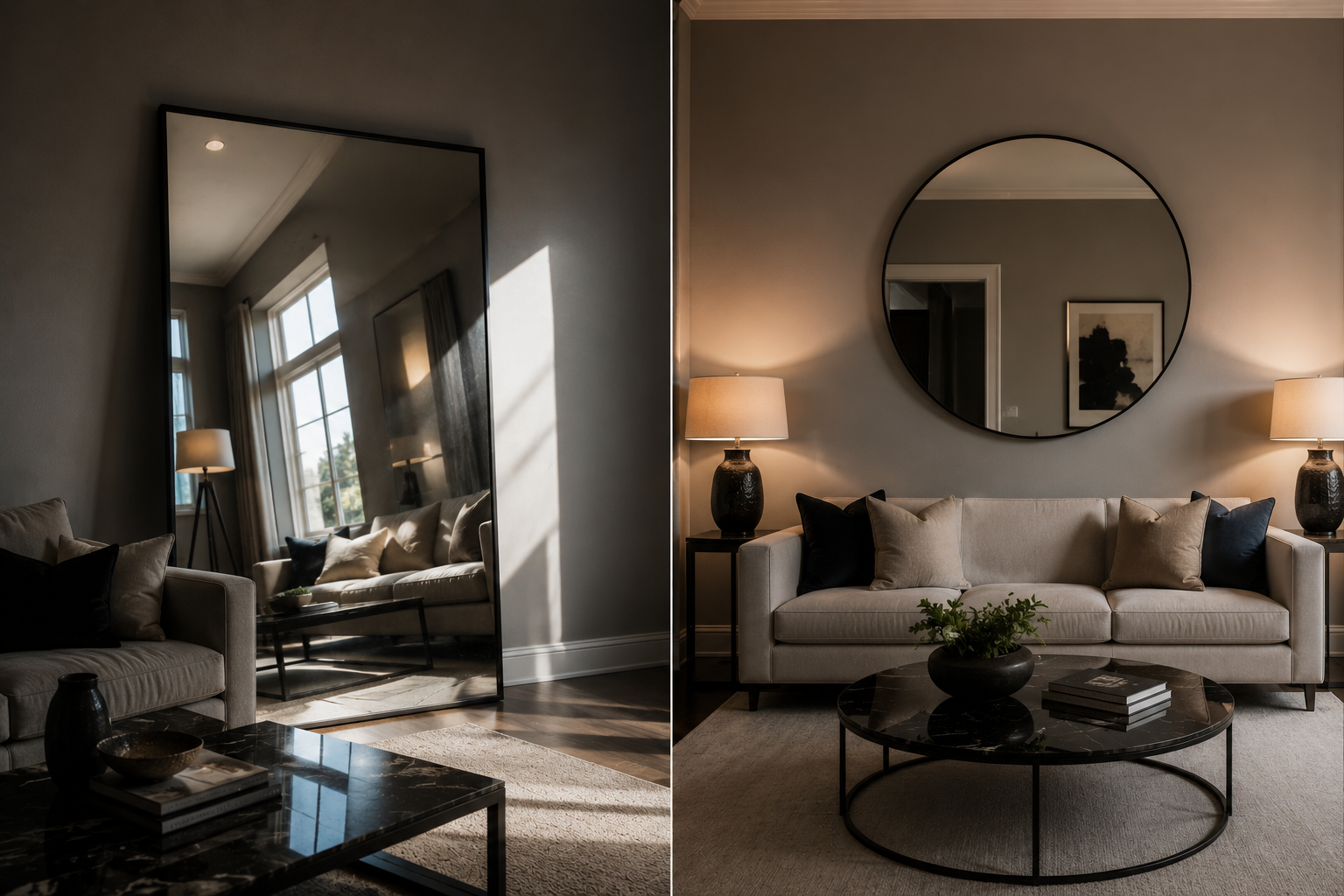
Mirrors are one of the best tools for interior design. However, they’re also the least understood. If you hang it in the right place, a mirror can help open up a small hallway, bring light into a dark corner, or tie together a room. If you hang it in the wrong place, it can make your space look chaotic, uninviting, or unsettling. Intention is often the difference between these outcomes. The majority of people select mirrors solely based on their size or style, not considering the impact that the mirror will have on its surrounding environment. This is where people go wrong and where the art of mirror placement really begins.
Understanding Light and Refraction
Mirrors do not create light; they only borrow it. Mirrors placed next to windows will reflect light from the window and spread it throughout the room. This creates a much more pleasant atmosphere. A mirror on the wall next to a window will achieve far less. Understanding the relationship between light sources and mirrors is essential to a proper placement. It is just as important to consider the angle of a reflection as its location. Mirrors that reflect a harsh overhead fixture will create glare, not warmth. A mirror that reflects soft diffused light is more welcoming. Spend some time observing the way light flows through the room at different times during the day before deciding where you want to hang your mirror.
Common Mirror Placement Mistakes
Homeowners most commonly make the mistake of hanging mirrors too high. Mirrors hung above eye-level reflect the ceiling, not the room. Such a placement has little visual value and makes the space seem disconnected. Another common mistake is placing a mirror directly opposite a cluttered area. Such an arrangement doubles the visual noise in the room and attracts attention to the exact thing you want to minimize. Mirrors opposite doors can be equally unsettling. Walking into your own reflection as you enter a space is not the kind of welcoming experience that designers are aiming for. Similar, placing two mirrors opposite one another can create an endless tunnel that is disorienting.
Strategic Mirror Solutions
Mirror placements that are purposeful will be the most effective. Place a mirror at eye-level on one of the walls to make a narrow hall feel wider. Position a large, reflective mirror opposite the main window to brighten up a dark dining room. The mirror will capture and diffuse natural light all day. A full-length, slightly angled mirror on an alcove or wardrobe door can add depth to a bedroom without overwhelming the space. Decide what you want your mirror to do first, before deciding on its placement. Consider it a design element that is functional and not an afterthought.
Mirrors Enhance Room Aesthetics
Mirrors have a significant aesthetic impact on a room. They are not just for their spatial effect. A large ornate, decorative mirror placed above a fireplace creates a focal point that anchors the room and draws the eye upward. A gallery wall of small mirrors adds visual interest and texture to a plain, flat wall. A sleek, frameless mirror design is perfect for minimalist or contemporary spaces, while distressed or gilded wooden frames are ideal for traditional or eclectic interiors. The frame of a mirror should reflect the other materials used in the space, for example, matching wood or metal tones. This creates an overall sense of harmony and cohesion.
Mirrors and Feng Shui Principles
Feng Shui is an ancient Chinese art of designing spaces for harmony and energy flow. It has a specific guideline on the placement of mirrors that closely aligns with modern design principles. Feng Shui believes that mirrors placed directly in front of the bed can disrupt sleep and cause restless energy. Mirrors placed in the dining area are auspicious, as they double abundance at the dinner table. Feng Shui warns against mirrors that cut off part of the reflection. Such a scenario is believed to have a negative effect on the person’s energy and self-image. No matter if you agree with these beliefs or not, the logic behind mirrors that reflect something positive is sound design advice.
Mirrors: Uses that Go Beyond Decoration
Mirrors have many practical uses that go beyond their aesthetic value. A mirror placed above a vanity in a small bathroom can do double duty. It is functional for daily grooming, and it visually expands the space. Wall-to-wall reflective surfaces are ideal for home studios and gyms. They help to monitor the user’s form and create a professional atmosphere. Mirrors strategically placed in retail and hospitality designs can manage the perception and flow of a space. Mirrors on the garden walls of outdoor spaces can give an illusion of depth. They also add structure to landscaping.
Expert Tips for Optimal Mirror Placement
Interior designers recommend that mirrors be hung at eye level, with the mirror’s center approximately 57-60 inches above the floor. This is the same standard for hanging artwork. Leaning large statement mirrors against the wall instead of mounting them creates a relaxed and layered appearance. Before deciding where to place the mirror, consider what it will reflect. It should ideally capture something beautiful, such as a window, piece of artwork, or architectural detail. One large mirror is more effective in smaller rooms than multiple small ones. A small mirror on a large wall looks like an afterthought. However, a large one in a smaller space will feel intentional.
Conclusion
The placement of mirrors is a discipline that rewards deliberate observation and careful decision-making. Hanging a mirror without thinking can ruin the design of a room. It can amplify clutter, distort proportions, and create visual tension in supposedly calm areas. Repositioning the mirror with purpose can completely transform a room. Begin by deciding what you want the mirror to accomplish, then use that goal as a guide for all subsequent decisions, including height, angle, frame, and scale. Once all these elements are in place, the mirror becomes more than just a decorative item.
FAQs
1. What is the best spot to hang a large mirror in your living room?
A living room mirror should be placed on a wall with natural light or near a focal point like a fireplace or artwork. Avoid placing mirrors next to cluttered areas, as this will double the visual noise instead of enhancing the room.
2. Do mirrors make small rooms look larger?
Yes. If you place a large mirror on the wall of a smaller room, it can increase the sense of space and depth. Placing the mirror adjacent to or opposite a window maximizes this effect.
3. In what room should a mirror reflect?
Mirrors shouldn’t reflect surfaces that are cluttered, toilets, or corners with poor lighting. These reflections can amplify negative elements in a room rather than enhance its appeal.
4. What height should a mirror on a wall be hung?
Mirrors mounted on walls should have their center 57-60 inches above the floor. This corresponds to an average eye-level. Mirrors that are hung too high will reflect the ceiling and offer little aesthetic or practical benefit.
5. Is it advisable to place a mirror in front of your bed?
A mirror facing the bed should be avoided from a Feng Shui and practical sleep hygiene perspective. Mirrors in the bedroom may cause light disturbances at night and contribute to restless sleeping.

Elena Rodriguez is a certified home inspector and DIY educator specializing in maintenance routines, home repairs, decor optimization, office setup, and smart device integration. She helps homeowners tackle projects with confidence using tools they already own. Her writing focuses on actionable steps for cleaning, fixing, arranging, and automating. Elena holds a degree in Construction Management and contributes to home improvement resources regularly.